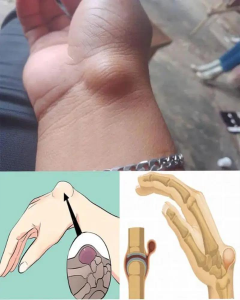
Have you noticed a strange lump on your wrist that seems to come and go? It could be a wrist ganglion, a fluid-filled bump that often appears on the back or front of the wrist. While this condition is usually harmless, it can be uncomfortable and even interfere with wrist movement. So, what exactly is a wrist ganglion, and how can you manage it?
What Is a Wrist Ganglion and Why Does It Appear?
A wrist ganglion, also called a synovial cyst, forms when synovial fluid — the natural lubricant that helps your joints and tendons move smoothly — builds up in an abnormal capsule or bursa. While the exact cause is not always clear, there are a few common factors that may contribute to the development of a ganglion:
Repetitive Wrist Use: Activities that put stress on your wrist, such as typing, writing, or playing certain sports, can lead to the formation of a ganglion over time.
Previous Injuries: If you’ve had a wrist sprain or blow, it could trigger the development of a ganglion cyst.
Arthritis: Some studies suggest that osteoarthritis may be linked to the appearance of wrist ganglions.
Genetic Factors: Some people are more prone to developing these cysts due to their family history.
How to Identify a Wrist Ganglion: Symptoms to Watch For
Wrist ganglions come in different sizes and can grow or shrink over time. The most common symptoms include:
A Soft, Visible Lump: The ganglion often feels like a soft, round lump on the wrist, either on the back or the front.
Pain or Discomfort: Some people experience pain or discomfort, especially when moving the wrist joint.
Pressure or Numbness: If the cyst presses on a nerve, it can cause a sensation of pressure or even numbness.
How to Treat a Wrist Ganglion: Options for Relief
Although a wrist ganglion is generally benign, it can still be a nuisance. Fortunately, there are several treatment options depending on how bothersome the cyst is:
Watchful Waiting
If the ganglion isn’t causing any pain or limiting movement, your doctor may recommend simply monitoring the cyst over time. Many ganglions go away on their own without needing any treatment.
Immobilization
For those who experience mild discomfort, wearing a splint or wrist brace can help reduce pressure on the joint, preventing the ganglion from growing and potentially offering some relief.
Aspiration
If the cyst is large or causing pain, a doctor might drain the fluid from the ganglion using a needle. However, there’s a chance the cyst may return after this procedure.
Surgery
In more severe cases, where the ganglion causes significant pain or restricts movement, surgical removal may be necessary. Surgery has a lower chance of recurrence, making it an effective option for persistent ganglions.
Should You See a Doctor?
While a wrist ganglion is generally non-threatening, it’s important to consult a healthcare provider to determine the best course of action for you. If the cyst causes discomfort, restricts movement, or keeps coming back, your doctor can help you decide whether monitoring, aspiration, or surgery is the right treatment.
Whether it’s a mild inconvenience or a persistent pain, a wrist ganglion can be managed with the right approach. So if you find yourself with a strange lump on your wrist, don’t hesitate to seek medical advice — your wrists will thank you!