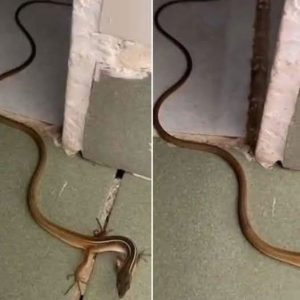
The moment I saw it dart across the basement floor, I froze in complete shock. The creature moved unbelievably fast, its dozens of twitching legs carrying it across the concrete like something straight out of a horror movie. What terrified me most were the incredibly long antennae stretching far beyond its body, constantly feeling the air as it searched for somewhere dark to hide. At first glance, it looked ancient, almost prehistoric, as if it had crawled out of another era entirely. My heart started racing because I honestly had no idea whether this thing was dangerous or if I should be preparing to get out of the house immediately.
After the panic settled slightly, I realized I had probably encountered one of the strangest insects commonly found inside homes: the house centipede. Despite their horrifying appearance, these many-legged creatures are surprisingly common in basements, bathrooms, garages, and damp storage areas. Their long legs and oversized antennae make them look much larger and more threatening than they really are. They thrive in dark, humid environments where they can hunt smaller pests like spiders, silverfish, cockroaches, and other insects hiding inside walls or corners. In a strange way, these nightmare-looking creatures are actually predators that help reduce other bug populations inside the home.
Still, that doesn’t mean seeing one is any less terrifying. House centipedes move with an almost unnatural speed that can make anyone jump in fear, especially when they suddenly appear at night or sprint across the floor without warning. Although they can bite if handled aggressively, bites are extremely rare and usually cause only mild irritation similar to a bee sting. The real concern is often what their presence might indicate about the environment. Since they prefer moisture and areas filled with other insects, spotting one could mean your basement has excess humidity, hidden cracks, or an unnoticed pest problem attracting them in the first place.
Experts usually recommend focusing less on the centipede itself and more on preventing the conditions that allow it to thrive. Reducing moisture with a dehumidifier, sealing wall gaps, fixing leaks, and keeping storage areas clean can make a huge difference. Many homeowners choose to remove them simply because their appearance is deeply unsettling, but others leave them alone because they naturally hunt more troublesome pests. Either way, if you suddenly spot one racing across your basement floor, you are definitely not alone in feeling horrified. Few household creatures trigger such instant panic quite like these fast-moving, alien-looking insects that seem to belong in a prehistoric jungle rather than inside a modern home.