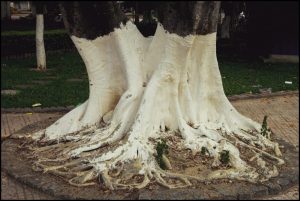
The white paint you see on some tree branches has always piqued my curiosity as I pass by. It appears as if there’s a significant message behind it. Recently, I delved into the intriguing method employed by tree planters to convey essential information about the trees, and the revelation is truly fascinating.
The color of the paint on a tree acts as a secret code, revealing critical details about the tree’s future and health. For instance, trees with orange dots are often marked for removal, and purple markings often signify “no trespassing” or indicate that the tree is on private land.
However, when it comes to white paint, its purpose is entirely different. Tree planters apply white paint to trees during the winter to shield them from sunburn, and here’s why it’s of utmost importance.
During the winter, trees experience significant temperature fluctuations. In the daytime, the sun warms the tree’s bark, causing it to expand. However, as night falls, the temperature rapidly drops, leading to the bark contracting and cooling down swiftly. These sudden temperature changes can result in the bark splitting, which can be detrimental to the tree’s trunk.
This is where the white paint comes into play. The light color of the paint helps prevent the tree’s trunk from overheating during the day by reflecting sunlight away from it. Consequently, this reduces the likelihood of cracks and splits caused by abrupt temperature changes.
Think of it as a natural sunscreen for trees, shielding them from the harsh winter weather. I was intrigued to discover how this white paint is applied correctly.
Tree planters typically use water-based latex paint for this purpose. To achieve the best results, it’s essential to dilute the paint correctly. As a general guideline, mix one gallon of paint with one gallon of water. This mixture ensures the paint isn’t too thick, making it easy to apply to the tree’s bark.
Most commonly, a paintbrush is used to apply the paint, but some tree planters opt to spray the thinned paint onto the bark, which can cover a larger area more efficiently. Regardless of the method used, it’s crucial to ensure the trunk is evenly covered to protect all its parts from the cold weather.
What intrigued me the most was how often this white paint should be applied. In most cases, tree planters paint the trunks only once a year.
Understanding the purpose of painting trees white was an enlightening experience. It’s remarkable how something as simple as paint can have a profound impact on the health of trees, especially during the winter. The white paint acts as a protective shield against sun damage and sudden temperature changes.
So, the next time you come across a tree with a fresh coat of white paint, you’ll know that someone cares about keeping our leafy friends healthy and thriving. Please share this valuable knowledge with your family and friends!