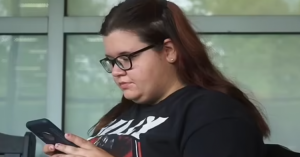
In a modern twist on the age-old deception of catfishing, a Kentucky woman’s heart-wrenching story sheds light on the dangers of forging online relationships based on falsehoods. McKala, a single mother, found herself ensnared in a web of deceit after she was led to believe she was in a secret online romance with the handsome Australian actor Dacre Montgomery, renowned for his role as Billy Hargrove in the hit series “Stranger Things.” This captivating tale of love, deception, and vulnerability serves as a stark reminder of the perils lurking in the digital age.
The saga began when McKala, grappling with the aftermath of a toxic marriage, sought solace and connection on an online artists’ forum. It was within this virtual realm that she encountered a stranger who skillfully concealed his true identity behind a user name. The impersonator eventually claimed to be Dacre Montgomery, preying on McKala’s admiration for the actor and luring her into a fabricated world of romantic messages and shared fantasies.

As the sham relationship unfolded, McKala found herself emotionally invested in a connection that remained solely confined to the digital realm. Despite never hearing her “paramour’s” voice or meeting him in person, she allowed herself to be swept away by the allure of his words. The individual purporting to be Dacre manipulated her emotions, capitalizing on her vulnerabilities, and creating a fantasy that seemed almost too good to be true.
The intricacy of the deception escalated as the imposter played on McKala’s empathy by describing an allegedly unhappy relationship with his real-life partner, model Liv Pollock. He painted a picture of captivity, asserting that Liv’s controlling behavior left him without agency and stifled his aspirations. McKala, who had experienced similar dynamics in her own past relationship, could not help but empathize with his plight, creating an emotional bond between them.
Months turned into a year, with McKala growing increasingly invested in her virtual connection. The imposter’s elaborate ruse included insider knowledge about “Stranger Things” and convincing references to the actor’s personal poetry collection. These seemingly genuine touches, combined with the individual’s assurances that he had ended his relationship with Liv, provided McKala with a sense of authenticity.
As the deception deepened, the imposter made financial demands, ultimately manipulating McKala into sending him approximately $10,000 in gift cards. He capitalized on her eagerness to help and her deeply ingrained fear of abandonment, effectively exploiting her emotional vulnerabilities. The Catfished team, a YouTube series dedicated to unmasking online deceptions, eventually entered the scene, helping McKala uncover the truth.
Upon investigation, it became evident that the person she had been communicating with was a cunning scammer. Evidence emerged that the imposter had used the same forged signature on multiple fake checks, revealing the extent of the deception. Additionally, a photo of a supposed homemade lasagna sent to McKala was traced back to a recipe shared by Martha Stewart, underscoring the lengths the scammer had gone to in order to maintain his facade.
The emotional toll on McKala was immense, as she grappled with the realization that her romantic connection had been a fabrication. Her vulnerability, stemming from past trauma, had left her susceptible to the manipulation of a skilled con artist. In reflecting on her experience, McKala emphasized that the desire for love and connection had blinded her to the signs of deception.
Ultimately, this cautionary tale highlights the importance of vigilance and skepticism in the digital age. It serves as a stark reminder that the allure of online relationships can sometimes cloud judgment and lead individuals down a treacherous path. McKala’s harrowing experience stands as a testimony to the power of emotional manipulation and the enduring impact of virtual deception. As technology continues to reshape human interactions, it is imperative that individuals remain cautious and discerning when navigating the complex world of online relationships.